The two most important open-source AI agents of 2026 are OpenClaw and Hermes Agent. Both are excellent, both are free, both live in your chat apps, and if you are reading this you probably need to pick one. We are in an unusually good position to answer: at PlusAgents we host both of them, all day, every day, for people who just want an agent without the server chores. We have no horse in this race (we literally sell both), so this is the comparison we give friends who ask.
The 30-second version: OpenClaw is the crowd favorite: the biggest ecosystem, the most channels, the most polished everyday experience. Hermes Agent is the specialist: the only agent with a true learning loop, so it gets measurably better the longer it runs. Breadth today versus depth over time. You genuinely cannot pick wrong, and the free plan means you can try both for $0.
What they have in common
First, the overlap, because it is bigger than the differences. Whichever you pick, you get:
- A real agent, not a chatbot: web research, browsing, files, email, shell access, scheduled tasks.
- Your chat apps as the interface: message it from Telegram, Discord, Slack, WhatsApp or Signal like a person.
- Open source under MIT, with your data staying on your infrastructure. No vendor can take either away from you.
- Model freedom: bring API keys, use aggregators, or point at your own endpoint.
- Self-hosted responsibility: both need an always-on machine, updates and monitoring (or one click on PlusAgents and it is our problem).
Community and ecosystem: OpenClaw by a mile
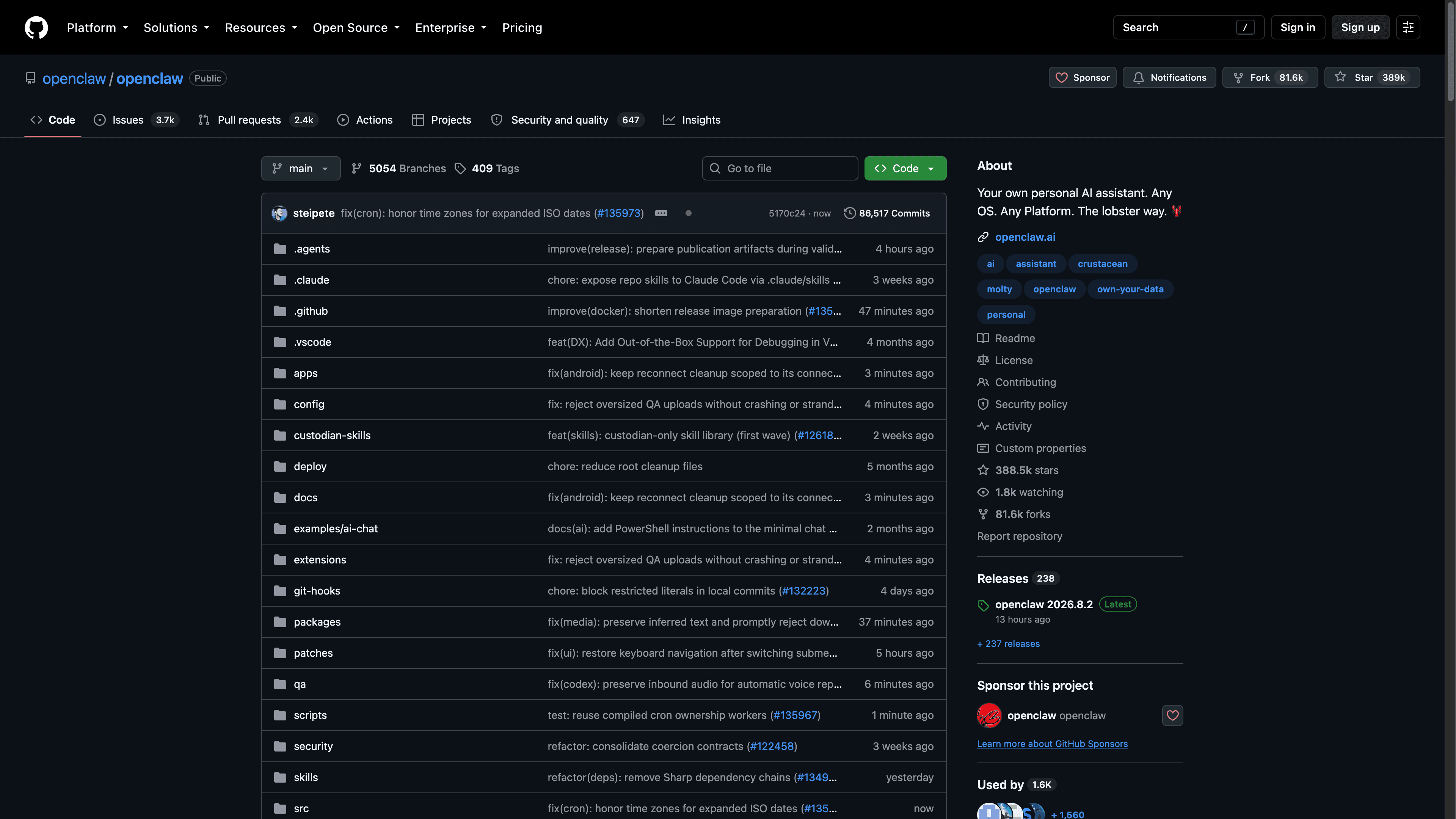
OpenClaw has roughly 388,000 GitHub stars, making it one of the most-starred repositories in the world, with an ecosystem to match: hundreds of community skills and plugins, guides for every conceivable setup, and an active Discord where your exact question has usually been answered twice. It began as Peter Steinberger's personal project and is now stewarded by the non-profit OpenClaw Foundation.
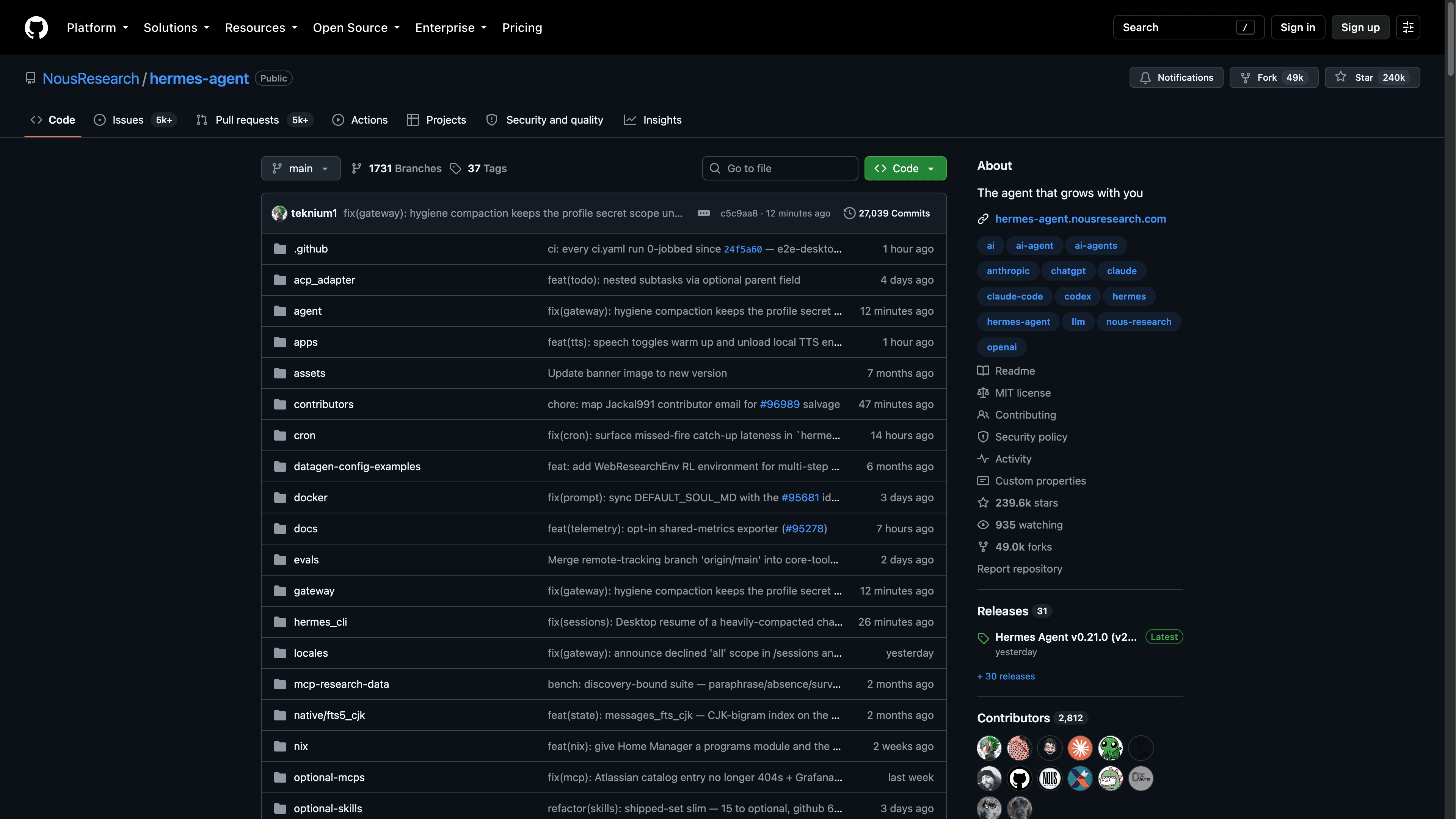
Hermes Agent, built by Nous Research and released in February 2026, sits around 240,000 stars: smaller, but hardly small, and its velocity is remarkable (the v0.21.0 Pantheon release alone rolled up ~5,800 commits from 760+ contributors). Still, if "someone has already built it" matters to you, OpenClaw's ecosystem is the bigger toolbox.
Memory and learning: Hermes by design
Both agents remember things. Only one is built around remembering. OpenClaw has solid persistent memory: preferences, projects and context carry across conversations, and 2.0 improved memory management further. For most everyday-assistant use, it is plenty.
Hermes goes several layers deeper with its closed learning loop: it writes its own reusable skills after hard tasks, improves them during use, searches its full conversation history, and builds a deepening model of you through dialectic user modeling. The practical difference shows up around week three: recurring work that used to need supervision starts completing in one clean pass, using skills the agent wrote for itself. No other major agent does this today. If your use case is repeated, structured delegation (reports, research briefs, ops routines), this is Hermes's unanswerable argument.
Channels and interfaces: OpenClaw for reach
Hermes covers the big five plus the terminal: Telegram, Discord, Slack, WhatsApp, Signal and a genuinely excellent TUI, with voice memo transcription and cross-platform continuity.
OpenClaw covers those and then keeps going: iMessage, Microsoft Teams, Google Chat, Matrix, Zalo and more via channel plugins, plus a rebuilt browser Control UI, a TUI, and native companion apps on macOS, iOS and Android with voice, camera and screen sharing. If your life happens in iMessage or Teams, OpenClaw is the only one of the two that meets you there.
Everyday experience versus compounding returns
This is the heart of the choice. OpenClaw is optimized to be delightful today: guided setup that reuses AI access you already have, a Control UI that shows what your agent is doing, desktop apps, and a plugin for everything. Day one feels like magic, and day thirty feels like day one, in a good way.
Hermes is optimized to be indispensable later. Day one is merely very good, and it asks more of you early: brief it properly, correct it patiently, feed it your recurring work. The reward curve bends up around week two and does not stop. Our guide to using Hermes is essentially a manual for maximizing that curve, and the equivalent OpenClaw guide is a manual for enjoying breadth.
Deployment: a wash, with different flavors
OpenClaw is a Node.js service (Node 26 recommended) with desktop apps, one-line installers, Docker and Nix; it happily runs on a laptop, a Mac mini or a VPS. Hermes is Python-based, installs with one curl command and no prerequisites, runs on a $5 VPS, and uniquely supports serverless backends (Modal, Daytona) where an idle agent costs pennies. Hermes is more explicitly cloud-first; an agent whose value compounds with uptime really wants a server rather than a laptop. Full walkthroughs: deploying OpenClaw and deploying Hermes Agent. On PlusAgents, deployment is identical for both: one click, live in a minute, credits included.
Momentum: both are sprinting
Neither project is coasting. OpenClaw 2.0 (August 2026) rebuilt the browser workspace and pushed hard into teams: shared sessions, role-based permissions, sandboxing, auditing. Hermes's Pantheon release (also August 2026) shipped Bot Mode (a society of named agents that talk to each other and to you in group chats), bot-to-bot messaging, learning cron jobs and desktop browser control. If anything, the two are converging from opposite directions: OpenClaw adding depth, Hermes adding polish.
So which one should you pick?
Pick OpenClaw if...
- You want the safest, most delightful default with the biggest community.
- You live in iMessage, Teams, Google Chat or Matrix.
- You want native mobile and desktop apps, voice, and a polished web UI.
- Your use is broad and unpredictable: a bit of everything, every day, and someone has probably built a plugin for it.
Pick Hermes Agent if...
- You delegate the same kinds of work repeatedly and want an agent that compounds.
- The idea of an assistant writing and refining its own skills excites you.
- You want deep recall: an agent that can cite what you decided together months ago.
- You are a builder who will use subagents, RPC scripting or the MLOps tooling.
Or do what we would do: try both
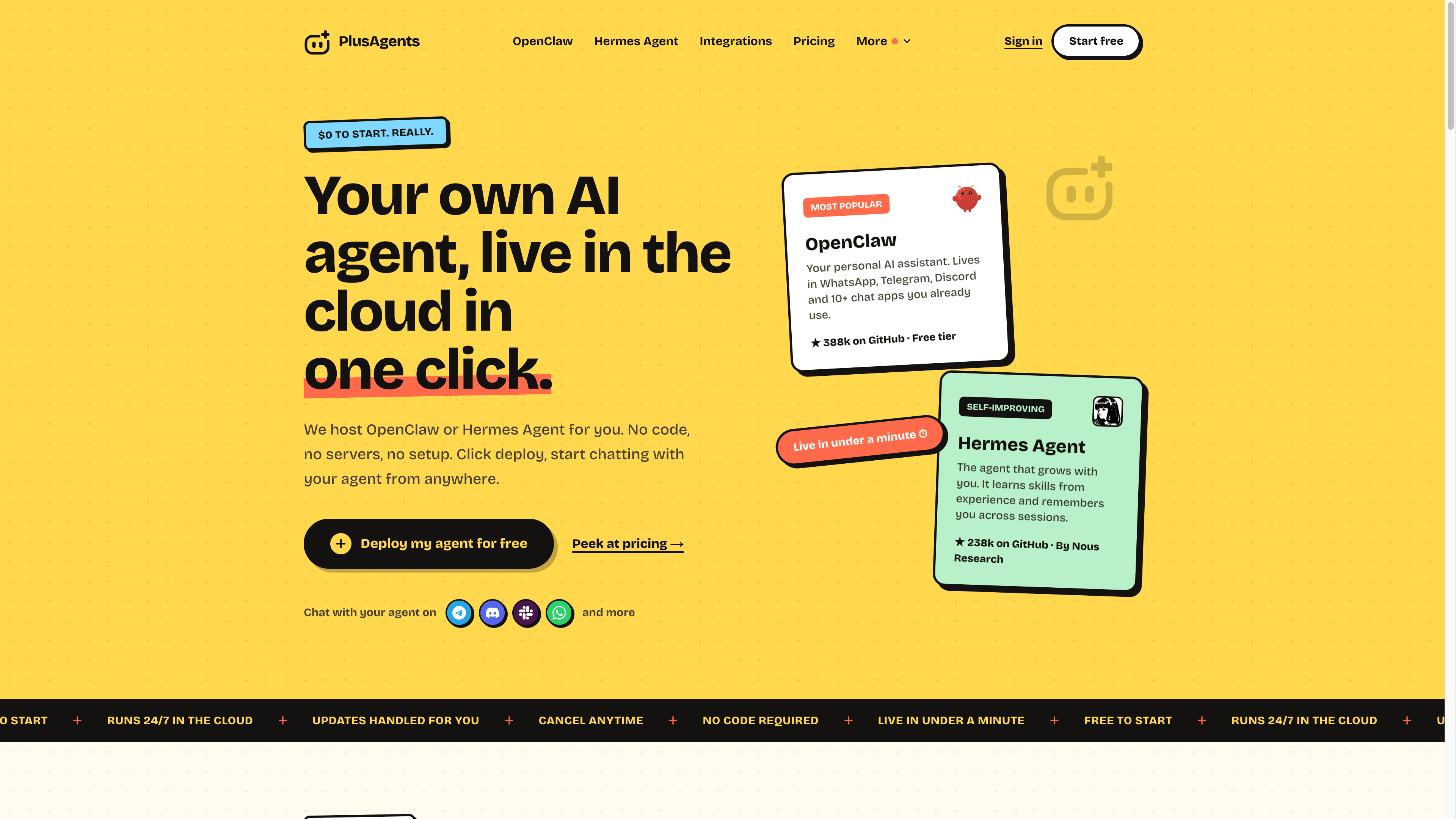
This is the part where a pushier company would steer you at the expensive option. Ours is simpler: plans are per agent and the free plan costs $0, so deploy one of each, message them for a week from your favorite chat app, and keep the one that clicks. Or keep both; plenty of our users run OpenClaw for daily life and Hermes for recurring work, which is honestly the power move. Your first agent is one click away.
Final verdict: OpenClaw for breadth today, Hermes Agent for depth over time. Both are superb, both are free to try, and the only wrong move is spending another week deciding instead of deploying one in the next sixty seconds.
Ready to meet your agent?
Deploy OpenClaw or Hermes Agent in one click. Free to start.
Deploy my agent for free